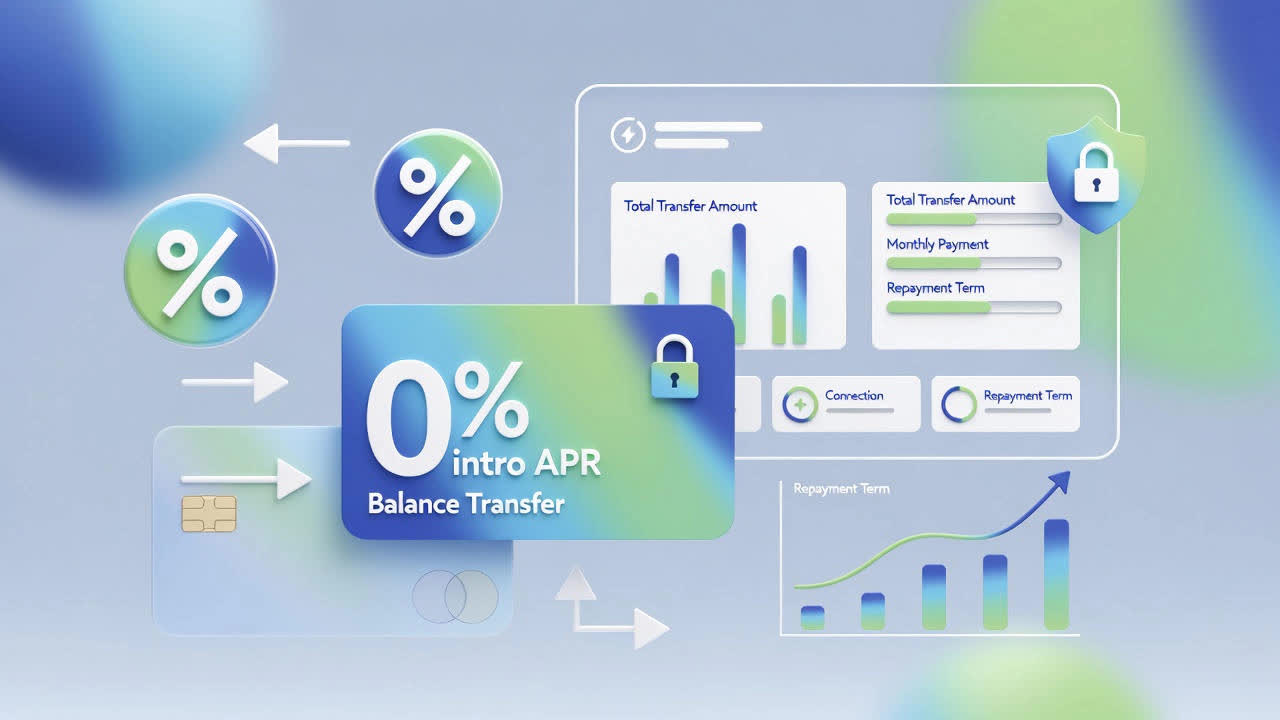
Managing credit card bills can be stressful, especially when high interest rates make repayment even harder. This is where the zero interest balance transfer option becomes a smart financial tool. Many banks and credit card companies offer 0% balance transfer plans that allow you to move your outstanding balance to a new card with no interest for a limited period. This helps you repay debt faster, save money on interest, and improve your financial health.
In this detailed guide, you’ll learn how zero-interest balance transfers work, their major benefits, hidden charges to watch out for, and how to use them wisely to become debt-free sooner.
What Is a Zero Interest Balance Transfer Option?
A zero-interest balance transfer allows you to move your existing credit card debt to another credit card that charges 0% interest for a promotional period.
During this period, you pay no interest, only the principal amount.
How It Works
- You apply for a new credit card offering 0% balance transfer.
- You request to move your outstanding balance from your old card.
- The new card pays your old bank.
- You repay the new card without interest for the promotional period.
This option provides breathing room for people struggling with high credit card interest rates.
Also Read: Zero Balance Saving Account Benefit Explained: Complete Guide for Easy and Smart Banking
Why Choose a Zero Interest Balance Transfer?
The biggest reason is savings. A typical credit card interest rate can be 30–42% per year, but with the zero-interest option, you pay nothing extra during the promotional window.
Key Benefits
- No interest for months
- Faster debt repayment
- Improved credit utilization
- Better cash flow management
- Opportunity to close high-interest cards
Let’s look at these benefits in detail.
Major Benefits of Zero Interest Balance Transfer Option
1. Pay Down Debt Faster
Without interest piling up every month, your payments go directly toward reducing the principal. This helps you clear your balance much sooner.
2. Save a Significant Amount of Money
If you’re paying high interest on your current card, a zero-interest transfer saves thousands of rupees in interest charges.
Example:
If you have ₹50,000 balance and pay 36% annual interest, that’s ₹18,000/year interest.
But with a zero-interest transfer? ₹0 interest.
3. Manage Multiple Credit Cards Easily
If you have balances scattered across multiple cards, you can consolidate them into one card and pay them off easily.
4. Improve Your Credit Score
Balance transfer helps by:
- Lowering credit utilization
- Improving on-time payment history
- Reducing the burden of revolving credit
This boosts your credit score within a few months.
5. Reduce Financial Stress
No interest means more control.
You get time to plan your finances, prioritize savings, and avoid late fees or penalty interest.
Things to Check Before Choosing a Zero Interest Balance Transfer Option
Although this offer is beneficial, you must check the following points before applying.
1. Transfer Fees
Some banks charge a transfer fee (2–3%).
Check this cost before making a decision.
2. Promotional Period Length
The zero-interest period may range from:
- 3 months
- 6 months
- 12 months
Pick a card that gives enough time to repay your total amount comfortably.
3. Late Payment Penalties
If you miss a payment:
- The 0% offer may end
- Normal interest may apply
- Penalties may be added
Always pay on time.
4. Eligibility Requirements
Banks check:
- Your credit score
- Income
- Existing debt
- Payment history
Ensure you meet their criteria.
5. Interest After the Offer Ends
Once the promotional period ends, regular credit card interest applies.
Make sure to repay most of your balance during the zero-interest period.
How to Apply for a Zero Interest Balance Transfer
Applying is simple and can be done online.
Step-by-Step Process
Step 1: Choose a Credit Card Offering 0% Balance Transfer
Compare:
- Duration of 0% interest
- Transfer fees
- Credit limit
Step 2: Apply for the New Card
Fill out:
- KYC details
- Income proof
- PAN/Aadhaar details
- Address proof
Wait for approval.
Step 3: Request Balance Transfer
Provide:
- Old card number
- Outstanding amount
- Bank details
Step 4: Bank Pays the Old Card
Your old card bill gets cleared.
Step 5: You Start Re-paying the New Card
Pay the new card on time and avoid additional expenses.
Best Practices for Using Zero Interest Balance Transfer Wisely
To get maximum benefits, follow these smart tips.
1. Don’t Use the Old Card Again
Once the balance is transferred, avoid re-spending on that card.
Otherwise, you may fall back into debt.
2. Pay More Than the Minimum Due
Since there’s no interest, pay as much principal as possible.
3. Avoid New Purchases on the New Card
New purchases may not be covered under the 0% offer.
4. Create a Repayment Schedule
Divide your total amount by the number of zero-interest months.
Pay that amount consistently.
Example:
You owe ₹60,000 and get 6 months interest-free.
Pay ₹10,000 per month to clear in time.
5. Use Automatic Payments
Set auto-pay to avoid missing deadlines.
Who Should Use a Zero Interest Balance Transfer Option?
This option is perfect for:
- People paying high credit card interest
- Those struggling with multiple card balances
- Anyone wanting to be debt-free faster
- People aiming to improve their credit score
- Individuals looking for short-term financial relief
If used responsibly, it can be a powerful financial tool.
Common Mistakes to Avoid
Many users make these errors while using the offer:
❌ Only paying minimum dues
This slows down repayment.
❌ Making new purchases
This increases your debt.
❌ Missing payment dates
This cancels your zero-interest offer.
❌ Not reading hidden terms
Always check fees and conditions.
Avoid these mistakes to get maximum benefits.
Conclusion
The zero interest balance transfer option is one of the smartest methods to reduce credit card debt quickly. It helps you save money, improve credit score, and repay debt without worrying about high interest. However, you must use it wisely—choose the right card, read terms carefully, and maintain disciplined repayment.
If you follow the strategies discussed in this article, you’ll be able to take full advantage of zero-interest balance transfers and become debt-free much faster.
