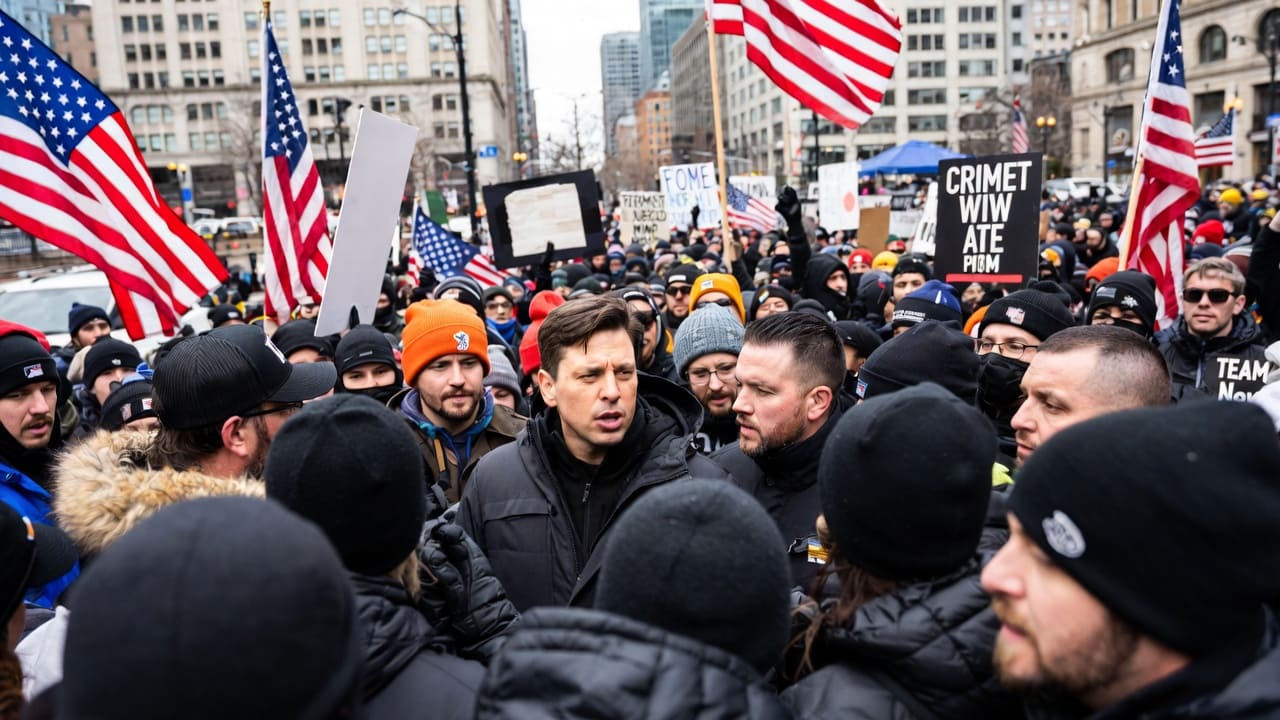
The name Jake Lang has recently drawn national attention after a controversial protest in Minneapolis, Minnesota turned chaotic and went viral across social media platforms. Videos showing angry crowds chasing him out of a public area sparked widespread debate, leaving many Americans asking: Who is Jake Lang and why did he protest in Minneapolis?
This article explains Jake Lang’s background, the purpose of his Minneapolis rally, why counter-protesters reacted so strongly, and what ultimately happened during the protest.
Who Is Jake Lang?
Jake Lang is a right-wing political activist and online commentator who first gained national recognition due to his involvement in the January 6, 2021 U.S. Capitol riot. He was arrested following the Capitol attack and later became a prominent voice among conservative circles that criticized the federal government and law enforcement actions taken after January 6.
After being released, Lang positioned himself as a political dissident and continued building an online following. He regularly posts commentary focused on:
- Immigration enforcement
- Nationalism
- Opposition to progressive policies
- Criticism of Islam and U.S. refugee programs
Because of this background, Lang remains a deeply polarizing figure across the United States.
Why Did Jake Lang Protest in Minneapolis?
To understand why Jake Lang protested in Minneapolis, it’s important to recognize the city’s political landscape.
Minneapolis is known nationally for:
- Strong immigrant and refugee communities
- Progressive local politics
- Vocal opposition to ICE and federal immigration raids
Lang announced that he would hold a protest rally in Minneapolis to speak out against what he described as government failures, immigration fraud, and what he claimed was a lack of enforcement of federal immigration laws.
Supporters viewed the rally as an exercise of free speech. Critics, however, believed the event was intentionally provocative and aimed at communities that have historically faced discrimination.
Jake Lang Minneapolis Protest Explained
The Jake Lang Minneapolis protest was scheduled to take place in a public area where demonstrations are legally permitted. Lang arrived with a relatively small group of supporters, intending to livestream speeches and share content online.
What he did not anticipate was the large turnout of counter-protesters. Hundreds of local residents, immigrant rights advocates, and anti-hate activists gathered to oppose his presence.
Within minutes:
- Lang’s speech was drowned out by chants
- Protest signs surrounded his group
- Tensions escalated rapidly
The event turned from a political rally into a confrontation.
Why Jake Lang Was Chased in Minneapolis Protest
One of the most widely searched questions following the incident is why Jake Lang was chased in the Minneapolis protest.
As emotions intensified, counter-protesters moved closer to Lang, demanding that he leave the area. Many participants said they viewed his rhetoric as threatening to immigrant communities and incompatible with Minneapolis values.
Video footage shows Lang attempting to walk away while protesters followed him, chanting and shouting. He was eventually forced to retreat under pressure from the crowd, effectively ending the rally.
For many local residents, chasing Lang away was seen as an act of community defense rather than political suppression.
Jake Lang Anti-Immigrant Protest Minneapolis: Community Response
Although Lang rejected the label, many activists described the rally as a Jake Lang anti-immigrant protest in Minneapolis.
The backlash stemmed from:
- Lang’s repeated criticism of immigration and refugee programs
- Past statements perceived as anti-Muslim
- His association with January 6, which remains traumatic for many Americans
Minneapolis is home to one of the largest Somali-American populations in the country. Community leaders argued that Lang’s protest felt like a direct challenge to their safety and belonging.
This explains why opposition was swift, organized, and overwhelming.
What Happened to Jake Lang in Minneapolis?
So, what happened to Jake Lang in Minneapolis after the confrontation?
During the chaos, Lang claimed he was injured while trying to leave the area. He later posted online stating that he was attacked and feared for his life. These claims could not be independently verified, but video footage confirmed that the situation became volatile.
Law enforcement eventually stepped in to prevent further escalation. No serious injuries were reported, and Lang was not arrested. However, his event was completely disrupted, and he left Minneapolis without delivering his planned message.
National Reaction and Media Coverage
The incident quickly spread across national news outlets and social media, reigniting debates around:
- Free speech rights
- Political extremism
- Public safety at protests
Supporters argued that Lang was silenced because of his political views. Critics countered that communities have the right to reject speech they believe promotes hate or division.
The protest became another example of how deeply divided the United States remains on issues of immigration and political identity.
Why This Story Matters to Americans
The question “Who is Jake Lang and why he protested in Minneapolis?” goes beyond a single event.
It reflects broader national tensions around:
- Who is welcome in public spaces
- How cities respond to extremist figures
- The limits of protest and counter-protest
Minneapolis became a flashpoint, but similar clashes are increasingly common across the country.
Conclusion
Jake Lang’s protest in Minneapolis did not unfold as planned. His history, rhetoric, and choice of location collided with a city known for strong immigrant advocacy. The result was a dramatic confrontation that ended his rally early and sparked national debate.
The Jake Lang Minneapolis protest explained shows how quickly political demonstrations can escalate in today’s polarized America. The reason Jake Lang was chased in the Minneapolis protest lies in deep community resistance. And what happened to Jake Lang in Minneapolis highlights the risks and consequences of provocative political activism.
As the nation continues to grapple with immigration, extremism, and free speech, stories like this are unlikely to disappear.
