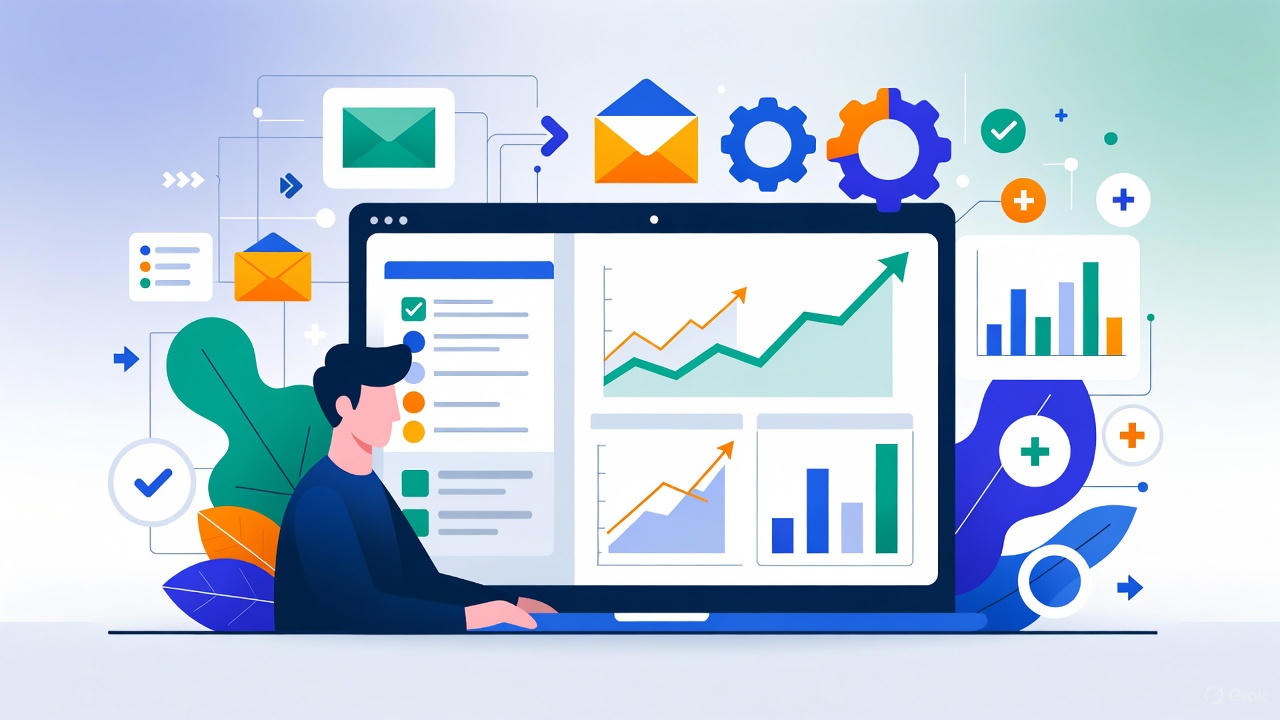
In today’s fast-paced digital world, businesses need to reach customers faster and smarter — and that’s where a marketing automation tool comes in. Whether you’re running a small startup or a growing e-commerce brand, automation tools can help you save time, boost conversions, and grow sales effortlessly.
With a powerful marketing automation system, you can automate repetitive tasks like email campaigns, social media posting, lead nurturing, and more — letting you focus on strategy while the system does the heavy lifting.
Let’s explore how marketing automation tools work, their benefits, key features, and the best ones available today.
What Is a Marketing Automation Tool?
A marketing automation tool is software designed to automate your marketing activities — from sending personalized emails to managing ad campaigns and tracking customer behavior.
These tools help you:
- Streamline your marketing process
- Improve customer engagement
- Generate and nurture leads
- Measure marketing ROI efficiently
Simply put, marketing automation is like having a 24/7 virtual assistant that runs your campaigns, collects insights, and keeps your business growing.
Why Businesses Need Marketing Automation
Manual marketing can only take you so far. Once your audience grows, managing leads and campaigns manually becomes inefficient and costly. Here’s why every modern business should invest in automation:
✅ Save Time and Effort
Automate routine marketing tasks like email follow-ups, campaign scheduling, and analytics tracking.
✅ Generate and Nurture Leads
Automated lead scoring and nurturing ensure no potential customer slips away unnoticed.
✅ Increase Conversions
By sending the right message at the right time, you improve conversion rates and build loyal customers.
✅ Improve Customer Experience
Deliver personalized messages, offers, and updates automatically based on customer behavior.
✅ Get Detailed Insights
Track performance across channels, identify trends, and optimize campaigns with real-time data.
Top Benefits of Using a Marketing Automation Tool
Here’s what makes automation a game-changer for businesses:
- Consistent communication: Stay connected with your customers without missing a beat.
- Data-driven decision making: Analyze metrics like open rate, CTR, and conversions instantly.
- Personalized campaigns: Customize emails and messages based on customer preferences.
- Higher ROI: Spend less time and money while achieving better results.
- Multi-channel reach: Manage email, social media, and paid ads from one dashboard.
Key Features to Look for in a Marketing Automation Tool
Before investing in any software, check whether it offers the following essential features:
1. Email Marketing Automation
Automatically send personalized emails based on triggers like sign-ups, purchases, or abandoned carts.
2. CRM Integration
Integrate seamlessly with your Customer Relationship Management (CRM) system for better lead tracking.
3. Lead Scoring and Segmentation
Score leads based on their behavior and segment them into categories for more targeted communication.
4. Social Media Automation
Schedule, post, and analyze your social media content directly from the platform.
5. Analytics and Reporting
Get detailed reports on campaign performance to make data-driven marketing decisions.
6. Multi-Channel Campaign Management
Manage your email, SMS, ads, and social media marketing all in one place.
7. A/B Testing
Test different subject lines, visuals, or CTAs to determine what performs best.
Also Read : Best AI Tool for Digital Marketing in 2026 – Boost Your Online Growth
Best Marketing Automation Tools in 2026
There are many great options available today, but here are some of the top-rated marketing automation tools to consider:
1. HubSpot Marketing Hub
HubSpot offers an all-in-one solution for inbound marketing, email automation, CRM, and analytics. It’s beginner-friendly and ideal for small to medium businesses.
2. ActiveCampaign
Best known for powerful email automation and CRM integration, ActiveCampaign helps businesses send targeted, behavior-based emails.
3. Mailchimp
Mailchimp is popular for its simple UI and affordable plans. It supports email automation, landing pages, and analytics.
4. Zoho Marketing Automation
Zoho provides advanced automation tools, lead management, and detailed analytics — great for Indian businesses and startups.
5. Salesforce Marketing Cloud
A premium option for enterprises that need deep analytics, multi-channel marketing, and AI-powered automation.
How to Choose the Right Marketing Automation Tool
Choosing the right tool depends on your business size, goals, and budget. Consider the following before deciding:
- ✅ Define your marketing goals (email, social, CRM, etc.)
- ✅ Check the integration compatibility with your existing software
- ✅ Evaluate user-friendliness and customer support
- ✅ Compare pricing and scalability options
- ✅ Look for free trials before purchasing
💡 Pro Tip: Start with a free or low-cost plan to understand the features before upgrading.
How Marketing Automation Improves Business Growth
Marketing automation not only saves time but also drives measurable business growth. Here’s how it impacts key areas:
- Boosts Sales Funnel Efficiency: Automates lead tracking and follow-up.
- Improves Customer Retention: Keeps customers engaged with consistent updates.
- Enhances Data Accuracy: Reduces manual errors and ensures data consistency.
- Supports Scaling: Easily manage thousands of leads and campaigns without increasing workload.
With the right automation strategy, even small businesses can compete with large enterprises efficiently.
Challenges of Marketing Automation (and How to Overcome Them)
While marketing automation is powerful, it also comes with some challenges:
- Over-automation may feel impersonal — balance automation with human touch.
- Poor segmentation can lead to irrelevant messages — always refine your audience lists.
- Complex tools require training — start with user-friendly platforms.
Solution: Regularly analyze data, test campaigns, and personalize communication to keep your automation human-centered.
Future of Marketing Automation
The future of marketing automation is AI-driven. Artificial Intelligence and machine learning are making automation tools smarter — predicting user behavior, optimizing campaigns in real time, and improving personalization.
In 2025 and beyond, businesses using automation effectively will have a clear edge in marketing performance and customer loyalty.
Also Read : Best CRM Tool for Small Business – Top 5 CRM Software to Boost Sales and Growth
Conclusion
A marketing automation tool is no longer a luxury — it’s a necessity for modern businesses aiming for consistent growth. From nurturing leads to analyzing customer journeys, automation saves time, boosts sales, and helps you stay ahead of competitors.
Whether you’re a small business or an established brand, adopting marketing automation today can transform your entire marketing strategy for tomorrow.
Start small, test your campaigns, and gradually build a system that works automatically — while you focus on scaling your business.
